 UAE BARQ برق الإمارات – نبضك


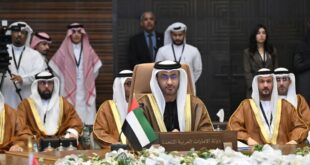
A joint statement issued following the 2nd Meeting of the Shura, Representatives, National, and Ummah Councils of the GCC Member States with the European Parliament in Brussels on Friday, called for strengthening the strategic partnership between the two sides and expanding parliamentary cooperation on security, energy, trade, investment and sustainable development to promote regional and international peace and stability.
The meeting brought together the President of the European Parliament and the Speakers of the GCC legislative councils, building on the inaugural meeting held in Abu Dhabi on 23rd June 2025 and the outcomes of the first EU-GCC Summit, hosted in Brussels on 16th October 2024.
The participants affirmed that the partnership between Europe and the Gulf was a cornerstone of stability amid growing international challenges, calling for the next EU-GCC Summit to further advance the partnership and strengthen its parliamentary dimension.
The statement stressed the importance of enhancing connectivity between the two regions and keeping maritime, land, air and digital transport routes open, secure and sustainable to support trade, energy, investment, security, economic resilience and people-to-people ties.
It noted that disruptions to maritime routes in the Strait of Hormuz and the Red Sea, together with the repercussions of attacks by Iran and its proxies, had underscored the close interdependence of the two regions’ security and prosperity, calling for the issue to receive clear political priority at the next summit.
On energy, the participants emphasised that security of supply and diversification of energy sources were essential to economic stability and sustainable development, particularly amid challenges facing energy markets, supply disruptions and their impact on economic and industrial sectors and living standards.
They called for joint solutions to ensure sustainable, reliable and diversified energy supplies, strengthen energy infrastructure and interconnections, and expand cooperation on modern technologies of mutual interest to support long-term energy security.
On economic and trade relations, the statement called for a stable and predictable economic framework and a clear political signal to resume negotiations on a comprehensive, balanced and mutually beneficial EU-GCC free trade agreement as a basis for deepening trade and investment ties.
It also stressed the importance of strengthening supply chain security, safeguarding international trade and financial channels, and preventing the circumvention of international sanctions.
To promote closer people-to-people ties, participants highlighted the importance of parliamentary engagement, cultural and educational exchanges, tourism and mobility. They reaffirmed their commitment to supporting progress towards reciprocal visa-free travel arrangements with the five remaining GCC countries.
The participants strongly condemned the continuing missile and drone attacks targeting GCC member states, whether directly or through Iranian proxies, including attacks on civilian and economic facilities, critical infrastructure, civilian airports, holy sites and essential infrastructure and services.
They stressed that these attacks endanger civilian lives and safety, violated state sovereignty, security and stability, and threatened regional and international peace and security.
They expressed full solidarity with GCC states and their peoples, reaffirming their right to self-defence under Article 51 of the Charter of the United Nations, and called on Iran and its proxies to cease the attacks immediately and unconditionally to prevent further regional escalation.
The statement underscored the importance of complying with United Nations Security Council Resolution 2817 (2026), condemning Iranian attacks against GCC member states and the Hashemite Kingdom of Jordan, and referred to the positions and statements issued by the European Union and the European Parliament in this regard.
Participants welcomed the existing level of coordination between the two sides and called for stronger cooperation on maritime security, cybersecurity, critical infrastructure protection, counter-terrorism, countering violent extremism, civil protection and resilience.
They affirmed that dialogue, diplomacy and international law are essential to restoring stability and achieving lasting solutions to challenges associated with Iran’s nuclear programme, ballistic missile and drone programmes.
They also called on Iran and its proxies to fully respect freedom of navigation and the right of transit passage through the Strait of Hormuz and Bab Al Mandab
The participants expressed concern over developments in the Red Sea and the threats they posed to one of the most important maritime routes connecting Europe and Asia.
They commended the contributions of EU maritime operations ASPIDES and ATALANTA, welcomed calls to strengthen Operation ASPIDES, and encouraged closer coordination between the Saudi-led multinational maritime coalition and EU Common Security and Defence Policy (CSDP) operations to protect shipping routes and shared energy supplies.
Regarding the situation in the Palestinian territories, participants stressed the need to protect civilians, respect international law and international humanitarian law, and ensure the safe, immediate, sustained and unhindered delivery of humanitarian assistance to those in need.
They called for consolidating stability, preventing renewed escalation and supporting political and diplomatic efforts towards a just, comprehensive and lasting peace based on the two-state solution, in accordance with international law and relevant United Nations resolutions.
On Ukraine, participants referred to UN General Assembly Resolution ES-11/1 on aggression against Ukraine, calling for an immediate ceasefire and efforts towards a comprehensive, just and lasting peace.
They commended the humanitarian and mediation efforts undertaken by Gulf states, including their contributions to prisoner exchanges and the return of Ukrainian children, and called for stronger EU-GCC cooperation to support de-escalation, diplomatic solutions and peace, security and stability in Europe and the Gulf.
At the conclusion of the conference, participants affirmed that parliamentary diplomacy constituted an enduring pillar of the partnership, given the role of parliaments in representing citizens, lending legitimacy to agreements and maintaining open channels of dialogue.
They also highlighted the importance of supporting regional and international efforts on security, energy, a sustainable economy, digital transformation and human rights to promote peace, stability and sustainable development.
The participants agreed to hold regular meetings, alternating between Europe and GCC member states, and to deepen dialogue through official visits, meetings of parliamentary speakers, joint parliamentary forums and exchanges of expertise between parliamentary institutions.
They further emphasised the importance of engaging young people, academics, civil society organisations and cultural stakeholders from both regions to strengthen ties between communities and make the partnership more relevant to citizens’ everyday lives, while keeping avenues for cooperation open across all areas of mutual interest.