 UAE BARQ برق الإمارات – نبضك
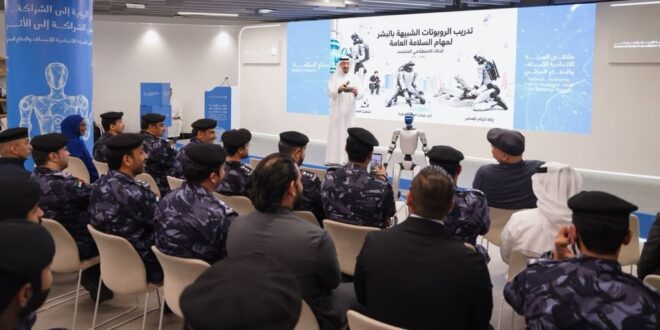
The Federal Authority for Ambulance and Civil Defence organised a specialised forum attended by Ahmed bin Ali Al Sayegh, Minister of Health and Prevention and Chairman of the Federal Authority for Ambulance and Civil Defence, alongside leaders, experts and specialists from the UAE and abroad.
The forum featured a presentation of the Global Fire Incident Footprint Framework, developed with contributions from and discussions involving more than 70 international leaders and experts.
The framework provides an integrated methodology for measuring the direct and indirect impacts of fires. It extends beyond traditional indicators relating to response times and incident containment to assess the wider effects on people, the environment, the economy, critical systems and public confidence, supporting the development of more effective prevention, response and recovery policies.
A more prepared and proactive national system
Ahmed bin Ali Al Sayegh, affirmed that the UAE continues to develop an integrated national ambulance and civil defence system founded on preparedness and proactive action, investment in human capabilities and advanced technology, and the adoption of leading global expertise and practices.
Al Sayegh said: “Developing emergency response systems is no longer limited to responding swiftly to incidents and bringing them under control. It requires a comprehensive understanding of their impacts and repercussions on people, society, the economy and the environment, as well as the development of proactive capabilities that help mitigate risks and strengthen the continuity of critical sectors.
A global framework for measuring the impact of fire incidents
The Global Fire Incident Footprint Framework is built around four key dimensions: the Economic Impact Footprint; the Human and Environmental Footprint; the Critical Systems Footprint; and the Trust and Global Reputation Footprint.
Together, these dimensions provide a comprehensive methodology for monitoring the direct and indirect consequences of fires and measuring their impact on individuals, communities, economic sectors and essential services.
The framework aims to advance the measurement of fire impacts by moving beyond traditional operational indicators, such as response time and the time required to bring an incident under control, towards a comprehensive assessment of long-term consequences.
These include economic losses, health and environmental impacts, the effects of incidents on business continuity and critical services, public confidence, and the global reputation of cities and countries.
Leadership development and AI adoption
The forum also witnessed the launch of the ‘997 Leadership Programme’, which aims to develop leadership capabilities across the ambulance and civil defence system.
The forum’s outcomes also included the appointment of AI ambassadors across various entities and units to promote the responsible and effective adoption of artificial intelligence applications.
As part of efforts to strengthen academic and international partnerships, the forum witnessed the signing of a memorandum of cooperation with Georgetown University.
The memorandum supports collaboration in leadership development, crisis management, scientific research and capability building, while drawing on academic expertise and knowledge to advance emergency response systems and enhance their readiness.