 UAE BARQ برق الإمارات – نبضك


The Anwar Gargash Diplomatic Academy (AGDA) has welcomed a new cohort of students for the 2026 – 2027 academic year across four of its academic programmes, continuing its role in preparing future professionals for careers in diplomacy and international affairs.
The new intake includes the 12th cohort of the Post-Graduate Diploma in UAE Diplomacy and International Relations (PGD), the 10th cohort of the Master of Arts in Global Affairs and Diplomatic Leadership (MAGAD), the 6th cohort of the Master of Arts in Humanitarian Action and Development (MAHAD), and the 3rd cohort of the Master of Arts in International Law, Human Rights and Diplomacy (MILAD).
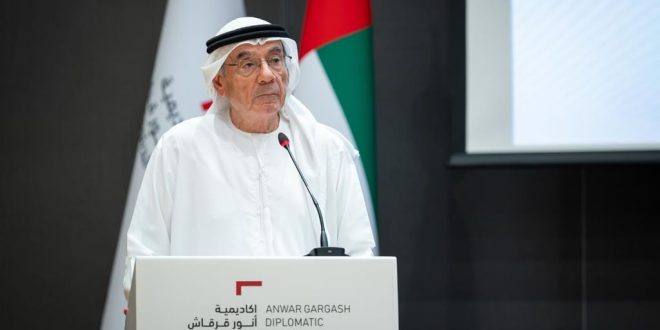
The students were welcomed during AGDA’s two-day event in Abu Dhabi, attended by Zaki Anwar Nusseibeh, Cultural Adviser to the President of the UAE, Chancellor of the United Arab Emirates University and member of AGDA’s Board of Trustees; Nickolay Mladenov, Director-General of AGDA; and Dr Mohammed Ibrahim Al Dhaheri, Deputy Director-General of AGDA.
During the event, Zaki Anwar Nusseibeh delivered a welcome address in which he reflected on the UAE’s longstanding belief that a nation’s strength and influence are defined not by its size, but by the contribution it makes to stability and development, and by its ability to foster trust and understanding between nations and communities. He also highlighted the central role of Emirati diplomacy in advancing peace and intercultural dialogue, and emphasised the importance of investing in people as a foundation for sustainable development and continued progress.
He stated, “Under the leadership of President His Highness Sheikh Mohamed bin Zayed Al Nahyan, the UAE continues to build strategic partnerships and advance sustainable development, guided by the firm belief that our shared future depends on meaningful partnerships, constructive dialogue, and mutual understanding.”
Nickolay Mladenov said the changing nature of global affairs is placing new demands on those entering diplomacy: “Diplomats today cannot look at security, trade, technology, humanitarian action, climate or international law in isolation. Decisions in one area carry consequences across many others. The ability to make those connections, exercise sound judgement and build trust even when interests diverge has become fundamental to effective diplomacy.”
Dr. Mohammed Ibrahim Al Dhaheri highlighted the responsibility that comes with preparing to represent the UAE: “What students learn here will matter most in how they apply it, the decisions they make and the standard they set for themselves. Preparing for diplomacy means understanding your country’s interests and values, while developing the judgement to operate in environments where the answers are rarely simple.”
Over the academic year, students will combine academic study with practical exposure to contemporary diplomacy, engaging with international leaders and experts and examining areas including the UAE and Gulf’s relations with Asia, Africa and Europe, energy and climate, peace and security, economic diplomacy, international law, the practice of human rights, and innovation in diplomatic practice. Students across all four programmes will also improve their diplomatic, negotiation and crisis-management skills through various simulation-based exercises offered across their coursework.