 UAE BARQ برق الإمارات – نبضك


The United Arab Emirates reported significant growth across its energy, infrastructure, maritime transport, housing and digital transformation sectors in 2025, underscoring its ability to pair long-term planning with execution on the ground.
The achievements reflect a government approach built on innovation, operational efficiency and improving quality of life, demonstrating the ability to translate national strategies into tangible results that strengthen the country’s competitiveness.
In the housing sector, the Ministry of Energy and Infrastructure issued 3,567 housing support decisions with a total value of AED2.546 billion. These decisions included housing grants, loans, and housing financing solutions.
These efforts contributed to an unprecedented achievement, as the homeownership rate among UAE citizens rose to 91 percent, one of the highest rates globally. The UAE also won, for the first time, the presidency of the United Nations Human Settlements Programme (UN-Habitat) General Assembly and secured membership on its Executive Council.
As for the energy sector, 2025 marked the launch of the Global Energy Efficiency Alliance, which attracted the participation of more than 40 countries and international organisations—an initiative that underscores the UAE’s advanced role in leading global dialogues on reducing consumption and enhancing efficiency.
The year also witnessed the publication of the State of Energy Report 2025, the election of the UAE as a member of the Water Council of the Organisation of Islamic Cooperation (OIC), and the launch of a guidance manual for supporting domestic workers in eight languages to raise community awareness of responsible consumption practices.
The implementation of the National Energy and Water Demand Management Programme 2050 further reaffirmed the ministry’s commitment to reducing energy demand by 42 percent–45 percent by 2050, through a comprehensive portfolio of projects and initiatives spanning the industrial, agricultural, built environment, and transport sectors.
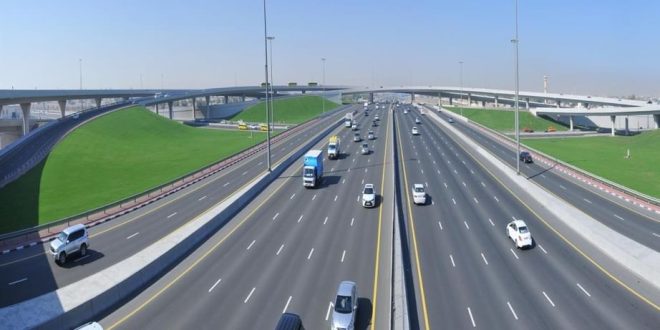
In the infrastructure and transport sectors, the Ministry worked on developing the National Agenda for Addressing Traffic Congestion, which includes a portfolio of national transport and road projects valued at over AED170 billion through 2030.
The Ministry’s plan targets a 73 percent improvement in the efficiency of federal roads over the next five years, through the implementation of the Emirates Road upgrading and capacity enhancement project, with an investment of AED750 million. The plan also includes increasing the capacity of Al Ittihad Road by 60 percent and Sheikh Mohammed bin Zayed Road by 45 percent.
Additionally, the plan includes a feasibility study for the construction of the Fourth Federal Road, extending 120 kilometres with a capacity of up to 360,000 trips per day.
Moreover, the Ministry completed five major transformational projects, which are the humanisation of buildings and their transformation into healthy, well-being–supportive environments, the development of the Green Recycling Yards Project, the advancement of green industrial transformation, the implementation of the Sustainable Farm Irrigation Project, and the recycling of electric and hybrid vehicle batteries.
The UAE also continued to strengthen its global maritime presence by hosting the World Maritime Day Parallel Event and launching the National Maritime Navigation Centre, in addition to being re-elected for the fifth consecutive term to Category “B” membership of the International Maritime Organisation (IMO).
The Ministry also won 41 local, regional, and international awards and obtained 19 ISO certifications, underscoring the maturity of its administrative systems and the quality of its operational processes.
In support of enhanced community engagement, the Ministry held 30 customer council meetings across the Emirates and signed 26 agreements and memoranda of understanding to expand partnerships, knowledge exchange, and amplify the impact of national projects. The year also witnessed the launch of the first fully integrated digital government services centre in Fujairah.
“The year 2025 represents an important milestone in the development journey of the energy, infrastructure, transport, and housing sectors in the UAE,” said Suhail Mohamed Al Mazrouei, Minister of Energy and Infrastructure. “We witnessed tangible progress in the implementation of strategic projects that reflect the vision of our wise leadership in building an integrated, more efficient, and sustainable ecosystem capable of supporting economic growth and enhancing quality of life.”
“Our efforts have focused on strengthening the readiness of federal infrastructure, improving the efficiency of the energy system, and developing advanced housing solutions that align with the needs of citizens and their future aspirations,” he said.
Al Mazrouei added that the achievements realised in 2025 confirm the Ministry’s ability to translate national plans into concrete, data-driven results by adopting a work model based on effective governance, efficient resource management, and the expansion of local, regional, and international partnerships.”
“We commence 2026 confidently, building on clear results and solid foundations, while reaffirming our commitment to supporting the objectives of the ‘We the UAE 2031’ Vision, on the path toward the UAE Centennial 2071. The Ministry will continue its work to ensure advanced infrastructure, a sustainable energy sector, and flexible housing solutions that collectively enhance the country’s competitiveness and leadership at both the regional and global levels,” he noted.