 UAE BARQ برق الإمارات – نبضك
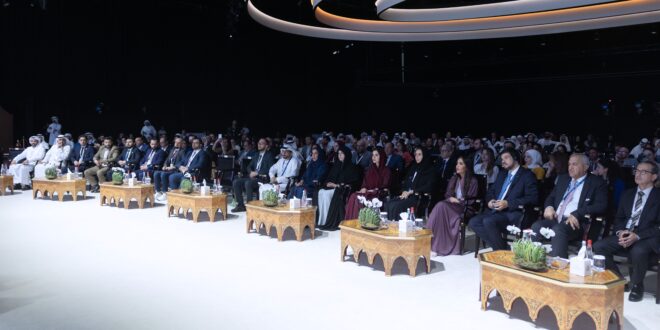
Governments must communicate verified information more quickly and clearly without compromising the independence of professional media, Arab information ministers said at the Arab Media Summit 2026.
The discussion highlighted how information gaps can quickly create information disorder, particularly during crises, making it essential for official institutions to provide timely facts while allowing media organisations to examine, explain and deliver them professionally.
The discussion took place during “The Ministers Roundtable”, featuring Dr. Ramzan Al Noaimi, Minister of Information, Kingdom of Bahrain; Dr. Khaled Zarour, Minister of Information, Syrian Arab Republic; Diaa Rashwan, Minister of State for Information, Arab Republic of Egypt; and Dr. Mohammad Hussein Al-Momani, Minister of Government Communication, Hashemite Kingdom of Jordan.
The session was moderated by Naoufer Ramoul, Media Presenter at DMI.
Dr. Mohammad Hussein Al-Momani said official institutions must communicate quickly, accurately and continuously, especially when complete information is not immediately available.
He said that, when an incident is unfolding, governments should acknowledge it and commit to providing verified updates, helping prevent unverified information from filling the gap. At the same time, he stressed that media organisations must be given sufficient space to work independently and professionally.
Diaa Rashwan reinforced this distinction, arguing that the role of government is to facilitate professional media through appropriate constitutional and legal frameworks rather than act as its guardian.
He said the weakening of professional journalism had allowed social media in parts of the Arab world to shift from being a tool for accessing news to becoming a primary source of news, creating greater space for rumours and inaccurate information.
Dr. Khaled Zarour said speed alone could not build trust without credibility. He highlighted the importance of protecting media freedom, developing specialised journalism and presenting information within its proper context.
Media, he added, must help audiences recognise verified facts rather than simply reinforcing selective narratives or existing biases.
Drawing on Bahrain’s crisis-communication experience, Dr. Ramzan Al Noaimi said public trust depended on providing honest information and practical guidance, even when developments were difficult.
He also said official media institutions should treat technological change as an opportunity, highlighting AI’s potential across news monitoring, editing, production and analysis of content consumption.
The discussion also turned to the ability of Arab media to reach international audiences. The speakers’ remarks highlighted the need for stronger professional capabilities, greater regional coordination and more effective formats for communicating beyond domestic audiences.
Taken together, their remarks pointed to a shared direction for strengthening trust: official institutions provide verified information promptly, professional media retain the freedom to examine and contextualise it and technology expands its reach without weakening accuracy.