 UAE BARQ برق الإمارات – نبضك
Since the beginning of art, artists have been searching for something beyond beauty. They have been trying to capture the invisible quality that makes a person unforgettable. This quality has many names: grace, refinement, character, presence. But perhaps the most universal word for it is elegance.
Throughout centuries, painters searched for their own language of elegance. Renaissance artists discovered it in harmony, proportion and the perfection of the human form. Romantic painters found it in emotion, mystery and the beauty of imperfection. Modern artists looked for it in individuality, atmosphere and personal style.
For many artists and writers, elegance was often connected with the figure of the smoker. The cigarette became more than an object. It became a visual gesture — a symbol of contemplation, independence, creativity and a certain refined distance from the world.
Oscar Wilde captured this idea perfectly through Lord Henry in The Picture of Dorian Gray:
“A cigarette is the perfect type of a perfect pleasure. It is exquisite, and it leaves one unsatisfied.”
For Wilde’s dandy, the cigarette represented a philosophy of life: controlled pleasure, aesthetic sensitivity and the search for refined experiences. Similar images appeared throughout literature — in the elegant world of F. Scott Fitzgerald, where cigarette smoke filled the atmosphere of Jazz Age parties, in Hemingway’s quiet moments of solitude.
But long before cinema created the iconic image of the elegant smoker, painters were already fascinated by this gesture.
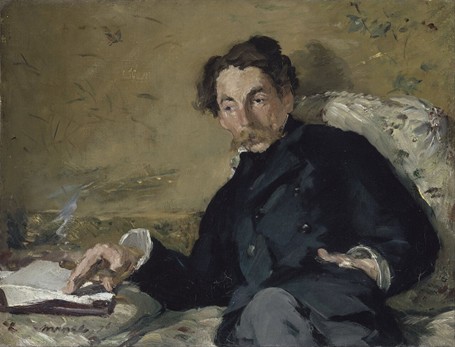
In the nineteenth century, when artists began turning their attention toward modern life, smoking became part of the visual culture of cafés, salons and intellectual circles. Édouard Manet portrayed a new generation of people who were confident, independent and connected with the rhythm of the modern city. In his world, elegance was not about perfection or aristocratic distance. It was about presence — the ability of a person to occupy a moment with confidence.
(Édouard Manet, Portrait of Stéphane Mallarmé (1876). Oil on canvas. Musée d’Orsay, Paris.)
Vincent van Gogh approached the cigarette from a completely different perspective. In Skull with Burning Cigarette, a simple object became a reflection on life, irony and human existence. For Van Gogh, the cigarette was not a symbol of luxury, but a powerful artistic sign. A small flame, a thin line of smoke, a simple gesture — all could carry a deeper emotional meaning.
In the artistic circles of the early twentieth century, smoking also became connected with creativity and intellectual freedom. Photographs and portraits of artists such as Pablo Picasso often showed the cigarette as part of the atmosphere of studios, conversations and creative rebellion. It became associated with the image of the artist himself — someone who observed the world differently and created his own rules.
The Art Deco era transformed this image once again. In the 1920s and 1930s, elegance became a complete visual language. Architecture, fashion, jewellery, automobiles and personal objects were united by a desire for sophistication and modernity. The cigarette naturally became part of this aesthetic universe — a detail that belonged to a world of evening lights, elegant clothing, expensive cars and carefully designed objects.
(Georges Barbier, Les Dames seules (1910). Fashion illustration. Courtesy of Wikimedia Commons.)
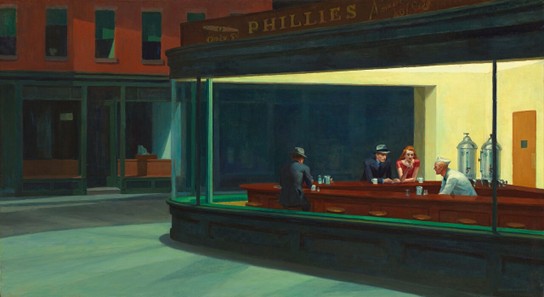
Later, Edward Hopper brought this tradition into a quieter and more mysterious dimension. His paintings replaced glamour with atmosphere. Empty streets, reflections on glass, artificial light and solitary figures created a feeling that would later become one of the foundations of film noir.
(Edward Hopper, Nighthawks, 1942. Collection of the Art Institute of Chicago.)
Today, artists continue this search for elegance. The language changes, but the desire remains the same: to capture the moment when a person becomes more than a person — when style, environment and emotion create a complete image.
Angelica Tim, an art historian and artist based in Saint Petersburg, continues this exploration in her own work. She studies masterpieces of world art and searches for the different forms that elegance has taken throughout history.
“Ancient art created the foundation of elegance,” Angelica says. “It gave us proportion, harmony and balance. But elegance does not belong to only one period. Every era discovers its own expression of it.”
Today, Angelica is preparing a series of paintings inspired by the streets of Saint Petersburg. The city itself becomes part of her artistic vision: the river fog, historic facades, evening lights and people moving through the streets.
“Luxury and elegance are always connected,” she explains. “It is not only one expensive object. It is the way everything comes together — the place, the light, the materials, the movement of a person. These details create an impression of elegance.”
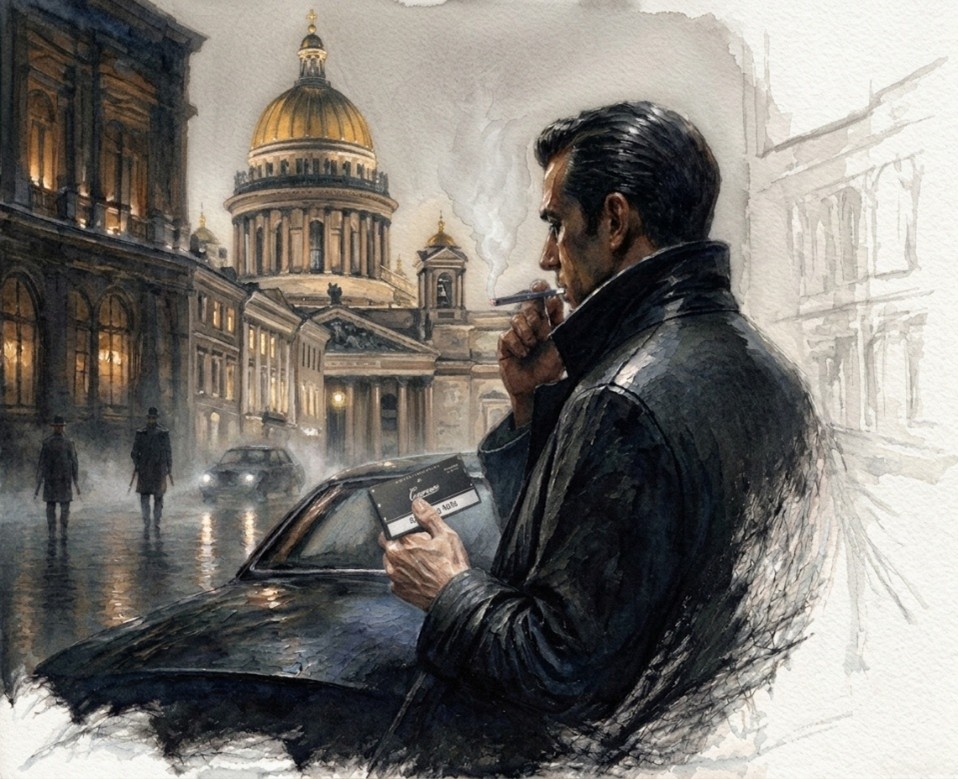
For Angelica, the Cigaronne cigarettes become one of these details. Its refined design, elongated silhouette and sophisticated appearance help her create the artistic image she is searching for. “Sometimes a small object can complete the whole composition,” she says. “It can add character to a person and help me express a certain feeling of elegance.”
(A sketch of a painting by Angelica Tim)
“For me, a person who smokes has a certain rhythm and presence. It creates a
pause. It creates a moment when you can see the character of the person. I
choose Cigaronne cigarettes because they fit the visual language I am searching
for. Their sophisticated style, elongated profile and hollow filter-mouthpiece
create a distinctive image.”
“For an artist, details are everything. A small object can complete the whole composition. It can reveal something about a person and help create the atmosphere of elegance.”
She also notices how the models react to the design.
“After posing, some models tell me that because of the special construction, their hands retain far less tobacco smell. For them this is important. For me, it is also part of elegance. Elegance is not only how something looks. It is how it behaves.”
Angelica’s Saint Petersburg series continues a tradition that began centuries ago: the search for beauty not only in what we see, but in what we feel. From Renaissance harmony to noir shadows, elegance has always lived in the same place — in the details that transform an ordinary moment into art.