 UAE BARQ برق الإمارات – نبضك
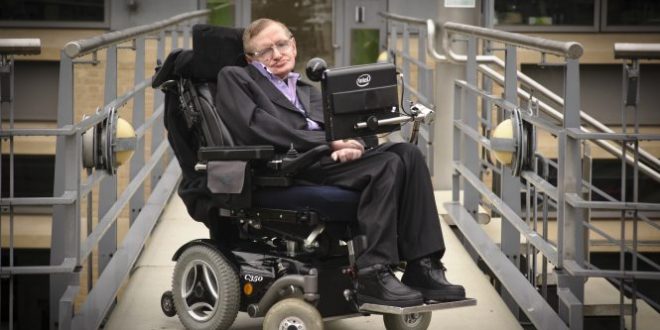
Don’t expect a mainstream read like Hawking’s best-selling “A Brief History of Time.” The 16-page (including 3 pages of footnotes) paper isn’t exactly Science 101.
To give it a read, it helps to be well-versed in physics and familiar with such terms as “gauge-gravity duality” and equations that look like this: ΨNB[hij , φ] = Z −1 QF T [h˜ ij , α˜] exp(iSst[hij , φ]/~)
The complex research delves into the idea that our universe may be only one of many (yes, a multiverse, just like in the comics). It explores the idea that our Big Bang wasn’t the only one of its kind and discusses how a space probe could possibly find such evidence.
The “evidence” angle is especially interesting because after Hawking’s death, there was much discussion of why he never received a Nobel Prize, with the answer being that his prior scientific discoveries couldn’t be proven. But even if proof is someday found for this final paper, according to Nobel rules, the honor cannot be awarded to someone who died before receiving it (though Hawking’s co-author could conceivably win for the work.)
“This was Stephen: to boldly go where Star Trek fears to tread,” co-author Hertog told the London Times. “He has often been nominated for the Nobel and should have won it. Now he never can.”
Source: CNET