 UAE BARQ برق الإمارات – نبضك
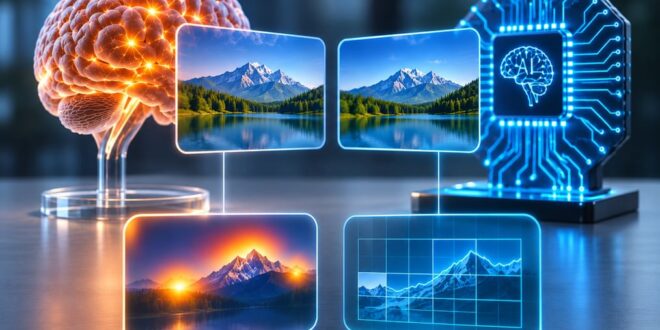
A study from Canada’s York University found that artificial intelligence (AI) models used to predict brain activity may rely on very different internal mechanisms to process visual information.
The study, published in Nature Machine Intelligence, found that matching the brain’s responses does not necessarily mean that the underlying processes are the same.
The researchers developed a new method called “reverse predictivity testing” to measure how well recorded brain activity could predict the internal features of AI models.
Their tests included 1,320 natural photographs and realistic synthetic images. The researchers also used 300 additional images showing the same subjects in different visual styles, including simplified drawings and artistic interpretations. AI models were generally successful at predicting the responses of recorded neurons. When the researchers reversed the process, those same neuronal responses were much less effective at predicting many of the models’ internal features.
The researchers warned that relying on such models could lead to misleading conclusions in neuroscience and research on human behaviour. They stressed the need for tools to identify which features of an AI model correspond to real neural activity.