 UAE BARQ برق الإمارات – نبضك
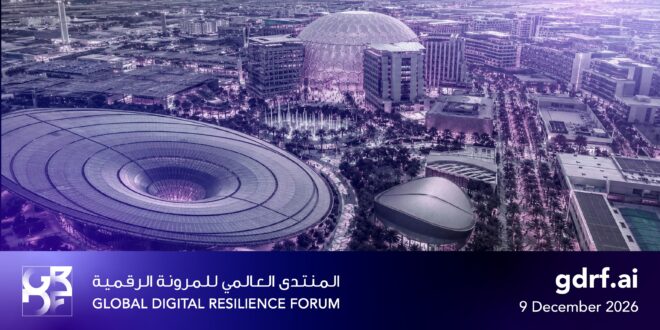
Dubai will host the Global Digital Resilience Forum 2026 on 8 and 9 December, organised by the Dubai Electronic Security Center (DESC), in collaboration with the International Telecommunication Union (ITU), the United Nations Office for Disaster Risk Reduction (UNDRR), and Sciences Po. The forum aims to strengthen international cooperation on critical digital risks and develop shared approaches to improving the preparedness and resilience of countries and critical sectors against disruptions to digital systems and essential services.
The forum follows the agreement signed by DESC and ITU in Doha on 12 November, on the sidelines of the ITU Plenipotentiary Conference 2026, and builds on the international “Critical Digital Risks” initiative, which led to the publication of the report “When Digital Systems Fail: The Hidden Risks of Our Digital World” in May 2026, with contributions from international experts. The report examines vulnerabilities arising from the growing interdependence of digital systems and infrastructure, highlighting how a disruption in one system can trigger cascading failures across critical sectors, including telecommunications, energy, healthcare, financial services and transport.
The forum marks an important next step in the initiative, moving the conversation beyond identifying and understanding digital risks towards practical measures for preparedness, response and recovery. It will also seek to strengthen cooperation between governments, international organisations, research institutions and the private sector to advance a more coordinated global approach to managing digital risks that extend across national borders.
Tomas Lamanauskas Secretary-General of the Deputy Secretary-General of the International Telecommunication Union (ITU), said: “Digital infrastructure now supports almost every part of daily life, from emergency communications to the way we work, learn and trade. Making it more resilient requires governments, industry, academia and international organisations to build a common picture of the risks and a joint plan to respond.”
He added: “The Global Digital Resilience Forum brings that collaboration to life. We value our partnership with the Dubai Electronic Security Center in organising the forum, and we look forward to concrete outcomes that countries can act on”
Yousuf Hamad Al Shaibani, Chief Executive of the Dubai Electronic Security Center, said: “Digital resilience has become a global priority that transcends national and sectoral boundaries. As essential services and economic activity become increasingly dependent on interconnected digital systems and infrastructure, addressing digital risks is no longer simply a matter of protecting systems against cyber threats. It requires a deeper understanding of how these systems depend on one another, alongside a shared ability to anticipate disruptions, prepare for potential crises and minimise their impact.”
He added: “Dubai’s hosting of this forum reflects its commitment to advancing international efforts to build safer and more resilient digital ecosystems. Through our collaboration with the ITU and our international partners, we aim to translate shared knowledge and expertise into practical approaches that strengthen national preparedness and safeguard essential services, and to establish the forum as a lasting international platform for joint action on digital resilience.”
Eng. Majed Sultan Al Mesmar, Director General of the Telecommunications and Digital Government Regulatory Authority (TDRA), said: “Resilience across telecommunications infrastructure and digital platforms has become a fundamental pillar of economic security and the continuity of essential services. It is no longer merely a technical matter limited to system readiness or protection against cyber threats, but a strategic necessity to ensure service continuity in the face of a wide range of risks and challenges, whether natural, technological, human-related or geopolitical.
He added: “In the UAE, we are embedding resilience into regulatory frameworks and the requirements for designing and operating telecommunications networks and digital platforms, guided by our conviction that the ability to withstand disruptions and recover from them must be built in from the planning and design stages, rather than treated merely as a response to crises.”
Further on the TDRA’s participation, Al Mesmar said: “Our participation as Strategic Partner in the Global Digital Resilience Forum reflects the UAE’s commitment to contributing to a more integrated and proactive international approach to strengthening the ability of digital infrastructure and services to withstand a wide range of risks, including cross-border challenges. We look forward to the Forum serving as a platform for moving beyond identifying risks towards developing practical recommendations and frameworks that enhance countries’ preparedness and their ability to anticipate, respond to and recover from disruptions. This will help establish resilience as an essential element in the future of telecommunications and digital transformation, ensuring the continuity of essential services on which societies and economies depend under all circumstances.”
DESC contributed to the international report through its participation with a group of international experts in examining high-impact risk scenarios and analysing interdependencies across critical sectors, which supported the development of proactive approaches to anticipating and managing large-scale digital disruptions.
The two-day programme will feature specialised technical workshops and panel discussions bringing together experts and representatives from relevant organisations. Discussions will examine major challenges facing critical digital infrastructure, explore potential scenarios involving widespread digital disruptions, and identify opportunities to improve international coordination, response capabilities and recovery mechanisms.
The sessions will also explore several risks identified in the international report, including solar storms, submarine cable disruptions, satellite failures and extreme weather events, examining how these threats could trigger cascading disruptions across the digital systems and services that underpin societies and economies.
A closed technical workshop will take place on 8 December, focusing on knowledge exchange and the assessment of priority risks and scenarios. The main forum will follow on 9 December, highlighting the importance of international cooperation in strengthening digital resilience and developing shared approaches to emerging threats.
The International Telecommunication Union (ITU), the United Nations Office for Disaster Risk Reduction (UNDRR) and Sciences Po join the Forum as Knowledge Partners, while the Telecommunications and Digital Government Regulatory Authority (TDRA) serves as Strategic Partner. etisalat also participates as Principal Partner, du as Technology Partner, and the Investment Corporation of Dubai (ICD) as Government Partner.