 UAE BARQ برق الإمارات – نبضك
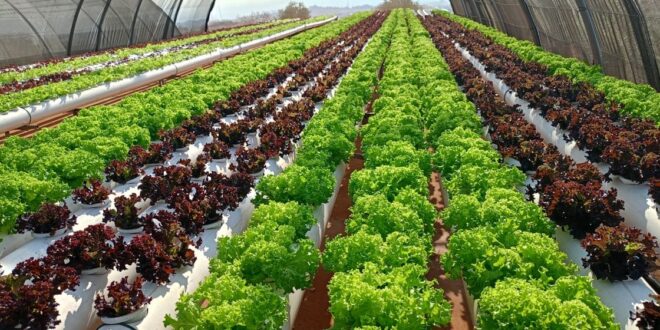
The Mohamed bin Zayed Water Initiative is field-testing finalist solutions from its Al Miyah Challenge for Agriculture that aim to reduce water consumption in greenhouse cooling and crop irrigation through engineered climate-management systems and water-retention technologies that enable efficient, controlled water use.
UAE-based CRETA Group and Raincatcher Technologies are finalists in the Al Miyah Challenge for Agriculture, a competition launched by the Mohamed bin Zayed Water Initiative.
The companies’ solutions address thermal loads inside greenhouses and water losses in sandy soils. Results and targets vary according to climate, crop and irrigation method, while both approaches can make use of existing agricultural infrastructure.
CRETA Group told the Emirates News Agency (WAM) that it has developed a proprietary, multi-zone greenhouse system integrating underground heat exchange, engineered airflow, differential-pressure management and passive reduction of solar heat gains.
Its dual-shell architecture defines interconnected thermal and pressure zones, enabling coordinated management of airflow and thermal loads, alongside heat exchange and thermal storage in the ground beneath the greenhouse.
The group explained that the system prioritises the microclimate around crops rather than cooling the entire space uniformly. This transforms the greenhouse into an integrated climate-management system, reducing reliance on water- and energy-intensive cooling and supporting agriculture that is less affected by outdoor conditions in both summer and winter.
It noted that, in the Mediterranean and milder climates tested, the system has operated without evaporative-cooling water in summer or fuel-fired heating in winter. Its Al Ain pilot is testing adaptations for desert conditions where temperatures can approach 50°C.
Peak-summer design targets include maintaining temperatures of 28–32°C in the crop zone and reducing cooling-water consumption by 85–90% compared with conventional fan-and-pad systems. These are design targets rather than final water-saving results measured for the pilot.
Based on conventional cooling-water consumption estimates of 8–15 litres per square metre per day, a greenhouse of the pilot’s size could require approximately 500–936 cubic metres over 120 peak-summer days. This provides the seasonal baseline against which the water-saving target is assessed.
The system manages air temperature and humidity before the air reaches the crops through controlled pre-cooling, integrated with underground heat exchange, thermal design and airflow pathways. The water-saving target includes water used for air preconditioning, while irrigation is assessed separately.